
Victory Friday | Issue 146
Orthopedic Insights: Elbow, Forearm, Wrist & Hand Pain? Try the Tricep! • Toe-Touch Stretch Magic • Pyramid Recalibration: Reaffirming Alignment and Stability as Essential Layers for Peak Performance

“Live as if you were to die tomorrow. Learn as if you were to live forever.”
~ Gandhi
Victory Friday is a weekly digest of reflections, insights, and tools from the world of functional manual and performance medicine. It is a free weekly publication. To support Victory Friday with a paid subscription, click below:
Welcome to Victory Friday: another one packed with a few under-appreciated gems: why the triceps might just be the “quads of the arm” when it comes to stubborn arm pain, a clever three-move sequence that can magically unlock your toe-touch in minutes, and a professional recalibration to the Pyramid of Why for peak performance and lasting pain prevention! Enjoy!
What I’m Into: Elbow, Forearm, Wrist & Hand Pain? Try the Tricep!
Strength coach Donnie Thompson, using his Body Tempering method, posted this video of triceps mobilization for both elbow and shoulder pain:

It got me thinking about a few things:
• The triceps is the quadriceps of the arm! It takes a lot of “weight bearing”: most of the push happens through the tricep. So, like the quad, it gets worked hard, gets stiff, and will powerfully impact elbow joint mechanics.
Even if the triceps doesn’t feel tight (think: Inert Stiffness Dysfunction1), a dysfunctional tricep can create stiffness and pain in the elbow.
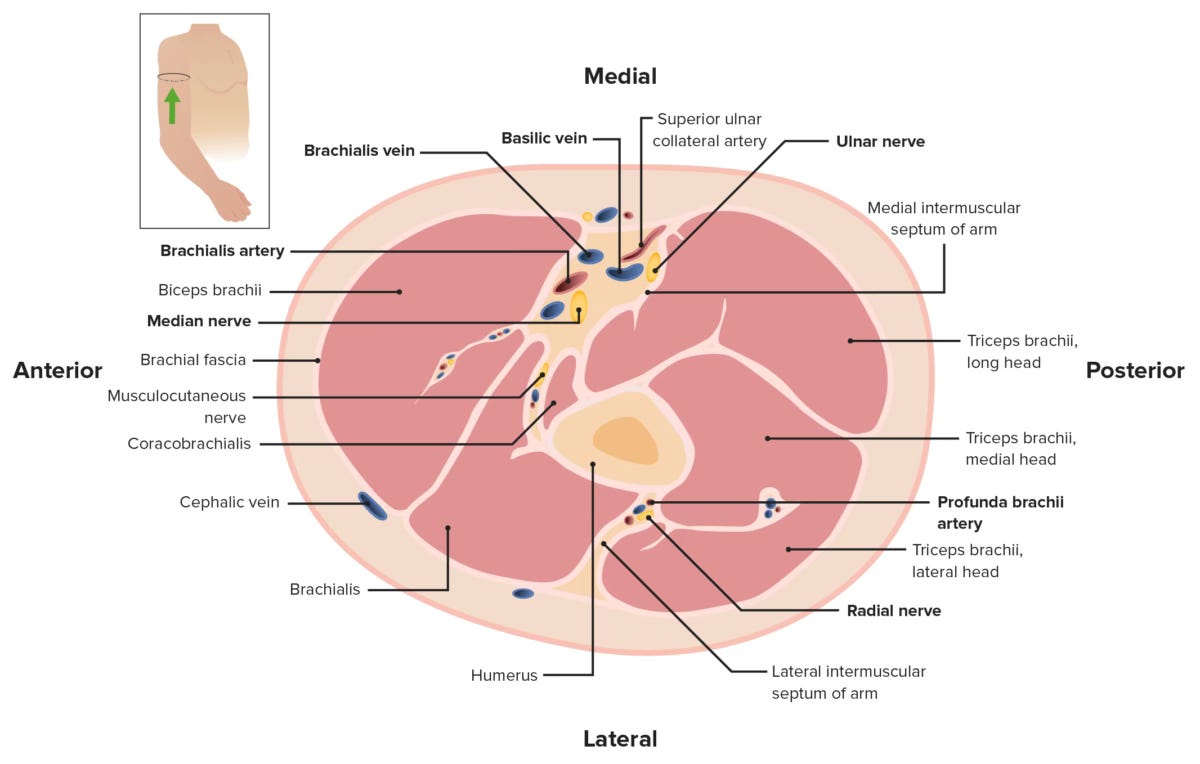
• Two key nerves travel adjacent the tricep: the radial nerve courses beneath (and to the outside of) the triceps; the ulnar nerve travels on the medial edge of the tricep, and:
Excessive stiffness and fascial tension in and around the tricep can
compress both the radial and ulnar nerves.
Lastly:
• In 17 years as a physio, I’ve never once aggressively mobilized a posterior upper arm (triceps) — until this week!
I performed some thorough triceps mobilization2on a couple clients — one with elbow pain; the other with stubborn neurogenic upper quarter pain. Stay tuned for some potential future Victories!
In the meantime: don’t sleep on this important pushing, weightbearing muscle of the upper body!
Cool Exercises I Like. Toe-Touch Stretch Magic. I stumbled upon this other video recently: a clever (if not “magical”) way to quickly and sustainably improve toe-touch mobility from fitness trainer and movement coach, David Thurin (@movementbydavid):

How does he rapidly improve toe-touch mobility in this "random person”? The three moves involve:
Neuro-fascial mobilization (flexion and rotation of the lumbar spine, sacrum, and pelvis helps mobilize the sciatic nerve: an often overlooked but stubborn System3 in the hip and posterior thigh region!)
Hip joint stabilization (activating the stabilizing muscles around the hip4 improves hip flexion and reduces tension in the hamstring
Reciprocal inhibition (active contraction of the quadriceps — the reciprocal muscles — relaxes and elongates the hamstring)
This represents a fun — yet very effective — mobility strategy that scores high on my “Low Effort, Low Pain, High Yield” Mobility Gold Standard5!
Victory Friday. Pyramid Recalibration: Reaffirming Alignment and Stability as Essential Layers for Peak Performance & Pain Prevention. Two weekends ago I took a terrific and unique course offering from the Institute of Physical Art.
Strategies to Optimize Performance (SOP) combines two key foundational pillars of the Institute:
CoreFirst® Strategies: which promotes the concept that balanced, efficient postures and body alignments result in automatic core stability muscle engagement, creating the foundation for efficient movement: maximizing strength, power, endurance and ease while minimizing tissue strain.
Proprioceptive Neuromuscular Facilitation (PNF): a dynamic motor control system, based on human genetics of growth and development, that utilizes innate neuromuscular pathways and motor patterns to create optimal efficient movement.
Using these pillars, the course trains clinicians to assess and improve movement quality, stability, and efficiency in higher-functioning patients and athletes.
The overall course focus is on refining observational and manual skills — for clinicians and clients to “see and feel” — to identify both efficient and inefficient alignment and movement in order to optimize function in increasingly complex, athletic movements and activities.
In other words, it breaks down complex motions — like throwing and running — into the most essential parts: spinal alignment, base of support stability, and extremity motion.
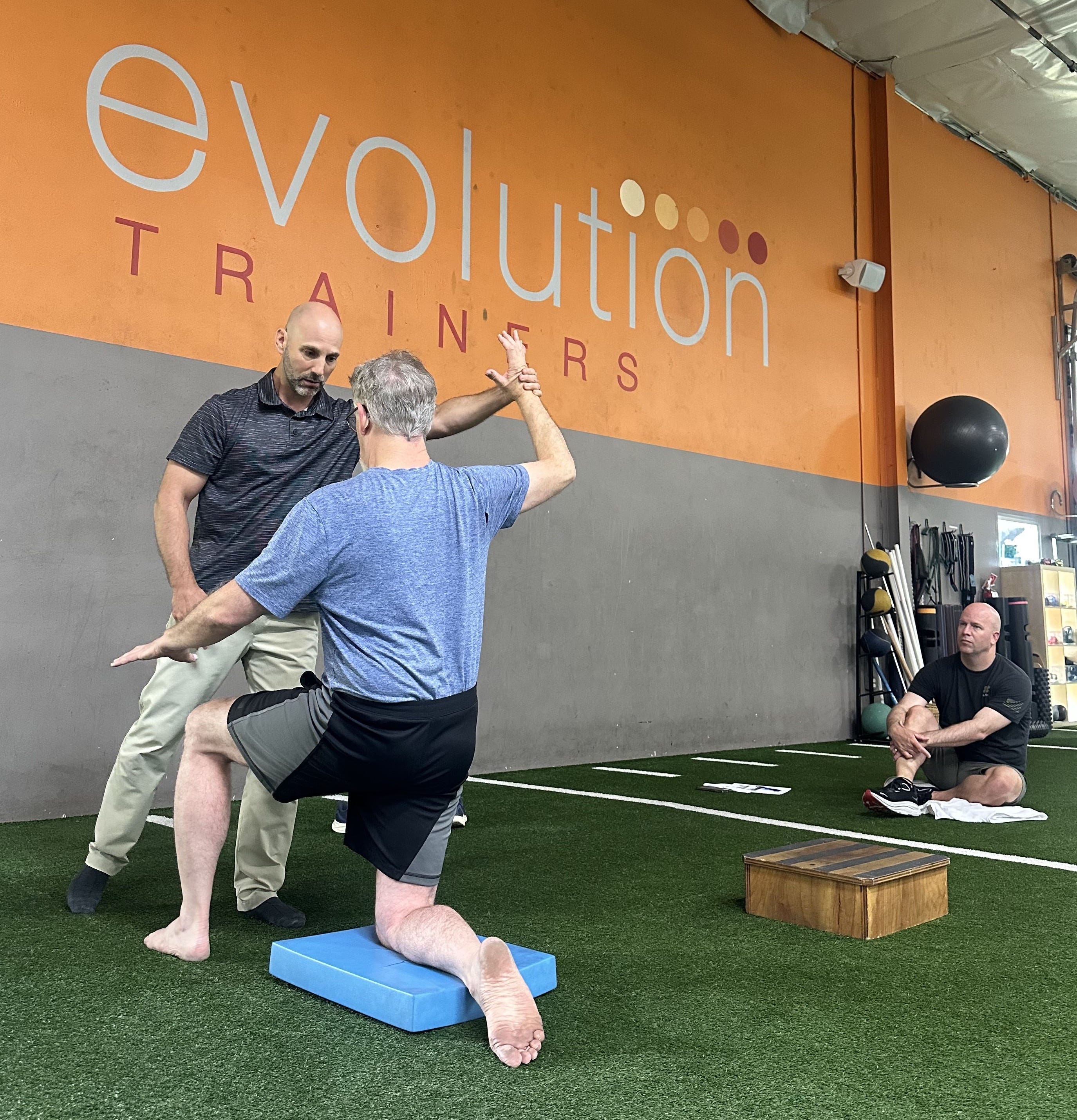
On the surface, it was a novel and fun way to take core principles of my post-graduate education and focus more directly on my every day clientele: highly-active people! Some of the basic but powerful takeaways included:
• finding and maintaining spinal neutral — as much, and for as long as possible — for all athletic movements.
• identifying and improving deficits in key areas of neuromuscular and motor performance, including core stability and mover muscle:
initiation
peak strength
endurance
What was, once again, both enjoyable and painful: “being the patient” by self-exploring the many stabilization and dynamic movement strategies to self-assess my own athleticism! It’s a good way to both see and feel the difference between efficient and inefficient!
But on a greater level, it was an important professional centering:
Am I sufficiently identifying and improving deficits of
neuromuscular strength and motor control in my clients?
In my professional Pyramid of Why, I tend to place mechanical factors atop the pyramid:
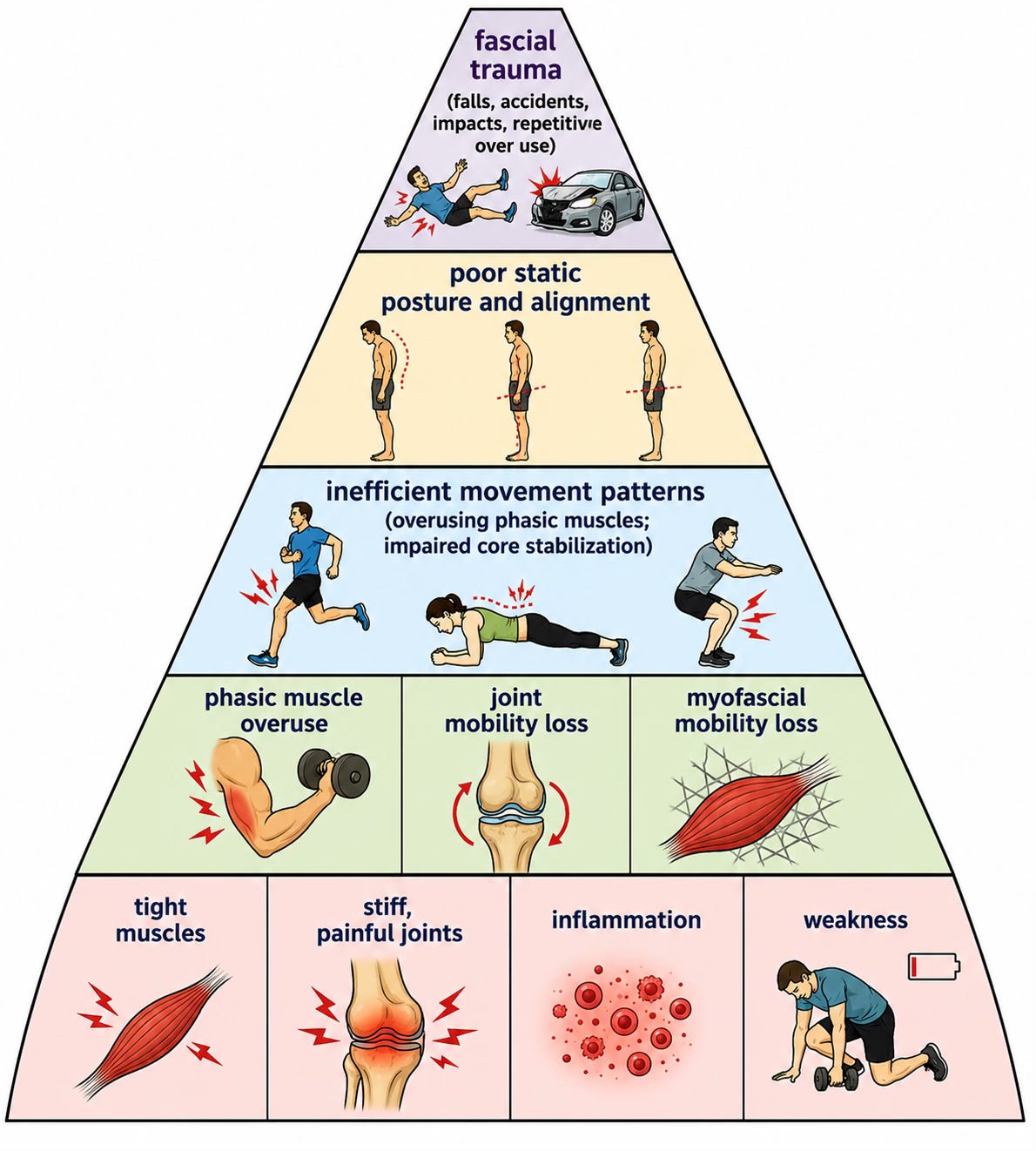
Indeed, high-energy traumas and repetitive overuse change fascia, which inexorably affects system efficiency, creating common downstream problems.
In such a system, hands-on manual therapy techniques are crucial in restoring fascial efficiency.
And, it’s the first step in the top-down, root cause treatment paradigm.
But a very close second are the next two levels:
• alignment and posture
• foundational movement efficiency
As such:
If we don’t teach and reinforce efficient alignment & movement patterns early (and often) in a treatment process: tissue strain re-accumulates!
And:
If we don’t train and optimize peak strength and endurance of stability & propulsive systems, compensatory patterns will take over, and: tissue strain re-accumulates!
I began to see deficits on how I treat some of my high-level — athletic and hard-working — physio clients.
Because even if I teach, say, efficient running alignment, hip hinge posture and hip-centric propulsive techniques, my running clients may not have sufficient peak strength and endurance to maintain that technique, over a long run.
SOP provided so many techniques to identify and correct alignment and movement issues, including training to shore up strength and endurance of these athletic systems. In just two weeks my clients and I have already benefited
Takeaways.
Recognize the foundations of efficient alignment and movement in all activities, and…
Emphasize both the teaching and learning of these efficient movements…then train ‘em up, aggressively, to ensure you and your client have the fitness to maintain them from start to finish!
Hands-on manual therapy magic is a valuable clinical skill that clients will always appreciate: it’s the key to quickly cutting through complex dysfunction.
But after that? All of us need to learn to adopt — the train to maintain — efficient alignment and movement strategies to effectively use, maintain and grow that pain-free movement and function!
Issue 146 is a wrap!
Find something interesting and helpful this week? Please share this publication!
Thanks for reading, and have a great weekend,

Issue 9. Inert Stiffness Dysfunction. An Inert Stiffness Dysfunction (ISD) is an asymptomatic, painless restriction in one area (usually fascial/muscular) that silently steals mobility and creates distant pain or dysfunction through connected tissues. The ISD site itself stays asymptomatic until directly treated. Examples: stiff quads causing knee pain, silent plantar foot restrictions driving calf issues, or dense contralateral neck fascia triggering unilateral neck/head pain.
More gentle, nuanced work, focusing on those fascial borders, rather than using a 50-pound metal cylinder!
Issue 41: Systems & Dimensions. Full and sustained pain relief and recovery of function often requires a comprehensive treatment approach of multiple Systems (body areas: spine, pelvis, abdomen, pelvis, hip, knee, etc) and Dimensions (types of tissue: muscle, tendon, bone/joint, fascia, nerves, blood vessels, etc).
Active Romanian deadlift strengthening is similar to using hip stabilization work to enhance hip flexion/hamstring mobility:
Issue 105: Joe’s (Hip) Six-Pack. A three-dimensionally strong hip will enhance not only focal strength and stability but also hip and leg mobility and overall athletic efficiency. This six-pack of exercises enhances coordination and stability in all six movements of the hip joint. Strength exercises include: prone hip internal rotation, sideplank clamshell external rotation, sidelying adduction, sideplank abduction, banded supine hip flexion and double- and single-leg bridging.
Issue 128: “Low Effort, Low Pain, High Yield”: Gold Standards for Mobility Exercise. When prescribing mobility work, prioritize exercises that are low-effort, low-pain, and deliver immediate, measurable results. This often requires the development and use of “side door” strategies: multidimensional techniques that unlock restrictions indirectly for better, more sustainable gains with less discomfort.
(Also outlined in Issue 121!)