
Victory Friday | Issue 119
Orthopedic Insights: (Extension) Hangin’ Around • Targeted Front-of-the Thigh Nerve Glides • Running Traction with Microspikes • Courageous Change for Better Patient Care

“I was waiting for something extraordinary to happen, but as the years wasted on, nothing ever did unless I caused it.” ~ Charles Bukowski
Victory Friday is a weekly digest of reflections, insights, and tools from the world of functional manual and performance medicine. It is a free weekly publication. To support Victory Friday with a paid subscription, click below:
Welcome to another Victory Friday! An action-packed week, including: more traction experimentation and breakthroughs, new nerve mobility strategies, the latest tech to keep you upright in winter, and a big change for good for my clinic! Check it out!
What I’m Into: (Extension) Hangin’ Around. I’ve written here before about the efficacy of traction for pain relief, mobility gains and even enhanced strength and efficiency.
A lot1.
Recently I have doubled down on traction practice, working both upper and lower body traction. And, a new wrinkle: both flexion- and extension-based traction:
• the 45-degree bench. This potent staple of my gym routine pins the lower body and hangs the trunk and upper body over the bench.
It is flexion-based: targeting mostly the posterior fascia, accentuated with a chin-to-chest head and neck stretch.
I wrote a few issues ago about bar “dead hanging” and its utility for spine pain relief2.
Following that I added more hanging to my gym routine. But recently, rather than simply hang in “neutral,” I added extension:
• bar-hanging with toe-drag extension. Hanging from a bar, just high enough to suspend my body, but low enough to allow my feet to touch. Then I position my feet behind me, on my toes, creating an extension bias.
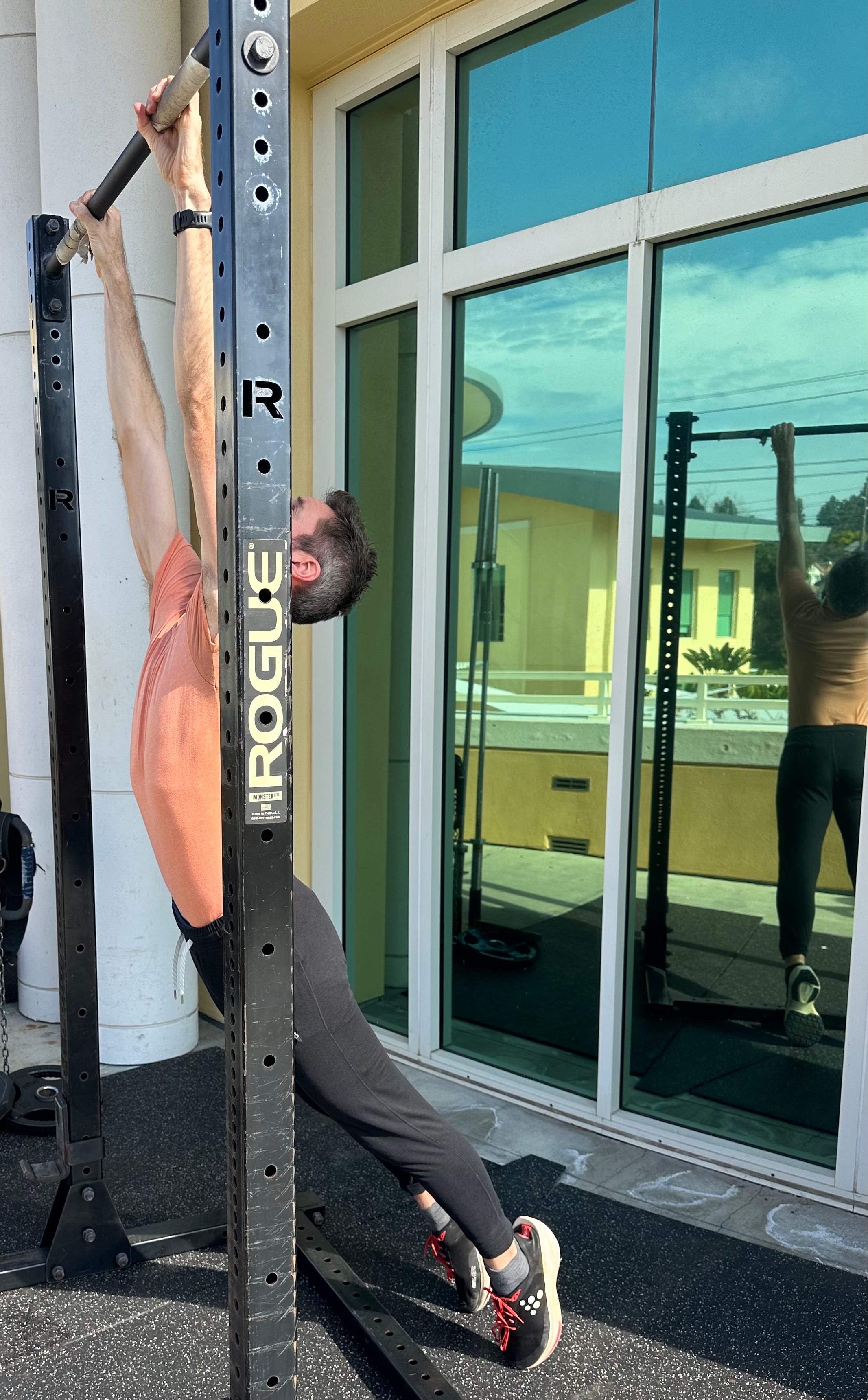
The toe-drag creates a powerful anterior fascial stretch, accentuated with cervical extension.
First impressions include feeling:
• less low back stiffness
• “taller” (elongated)
• more mobile functional hip (namely into extension)
Traction recommendations:
• Duration: I hold each position for only 30-60 seconds (the bar hang is more challenging, even with some foot assist).
• Intensity: the stretch feels generally “good”, though various points — especially with added rotation in the flexion bench — feel “spicy”. There was a time when I “hung” too long and felt some over-stretch pain in my mid-thoracic. If any stretch is painful, stop.
• Programming: I worked both flexion and extension traction back-to-back: as if to counterbalance one another. I work them in between hip and core exercises, which seemed to accentuate the comfort, ease and strength of that subsequent work.
Takeaway. Unwind The System. I’m a big fan of fascial mobility and the concept of pushing back against repetitive stress. Life on Earth compresses. Impact sports — including running and jumping — compress it further.
Unwind the system with traction and see what it may unlock for you.
Cool Exercises I Like. Targeted Front-of-the Thigh Nerve Glides. Nerves cause pain. Nerves can also create — and frustratingly perpetuate — myofascial tension (“muscle knots”).
This often happens when nerves lose mobility. Nerves don’t stretch, but they need to glide through our tissues.
While sciatic nerve issues often dominate discussions of lower-body nerve pain (especially in the back of the leg), nerves supplying the anterior thigh—such as branches of the femoral nerve—can also cause significant problems.
These anterior thigh nerves may produce symptoms that mimic or contribute to common “orthopedic” complaints, including hip impingement sensations, pain on the medial or lateral side of the knee, iliotibial (IT) band pain, and similar issues.
Think your stubborn thigh pain might be nerve? You’re in luck, because Taylor Kruse (@kruseelite), an athletic trainer that specializes in nervous system treatment and optimization, just posted a phenomenal resource for mobilizing all three major anterior thigh nerves:
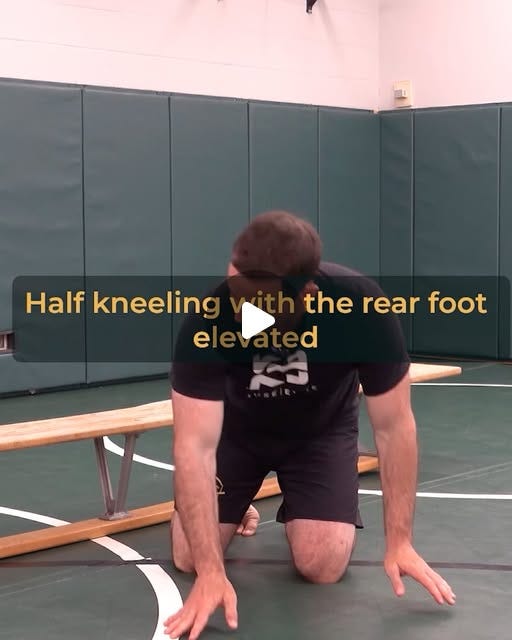
I’ll break down each strategy:
Femoral nerve. This is the largest anterior thigh nerve that runs down the middle, supplying the bulk of the front of the quadriceps to the knee.
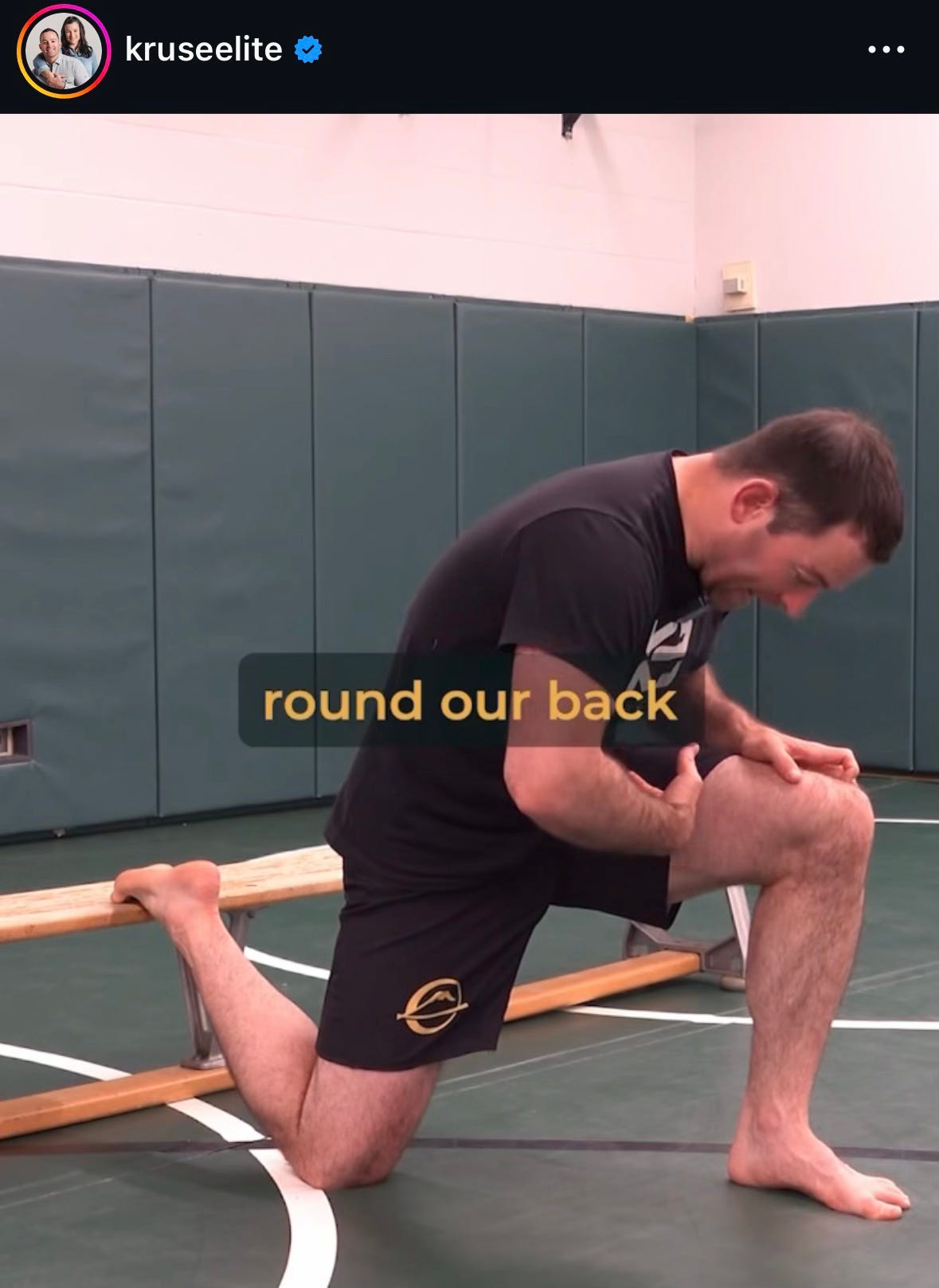
Femoral nerve stretch: straight anterior tension with spinal flexion and extension. Source: @kruseelite Obturator nerve. This nerve runs supplies the medial thigh and can be a sneaky culprit to stubborn groin pain and tightness.
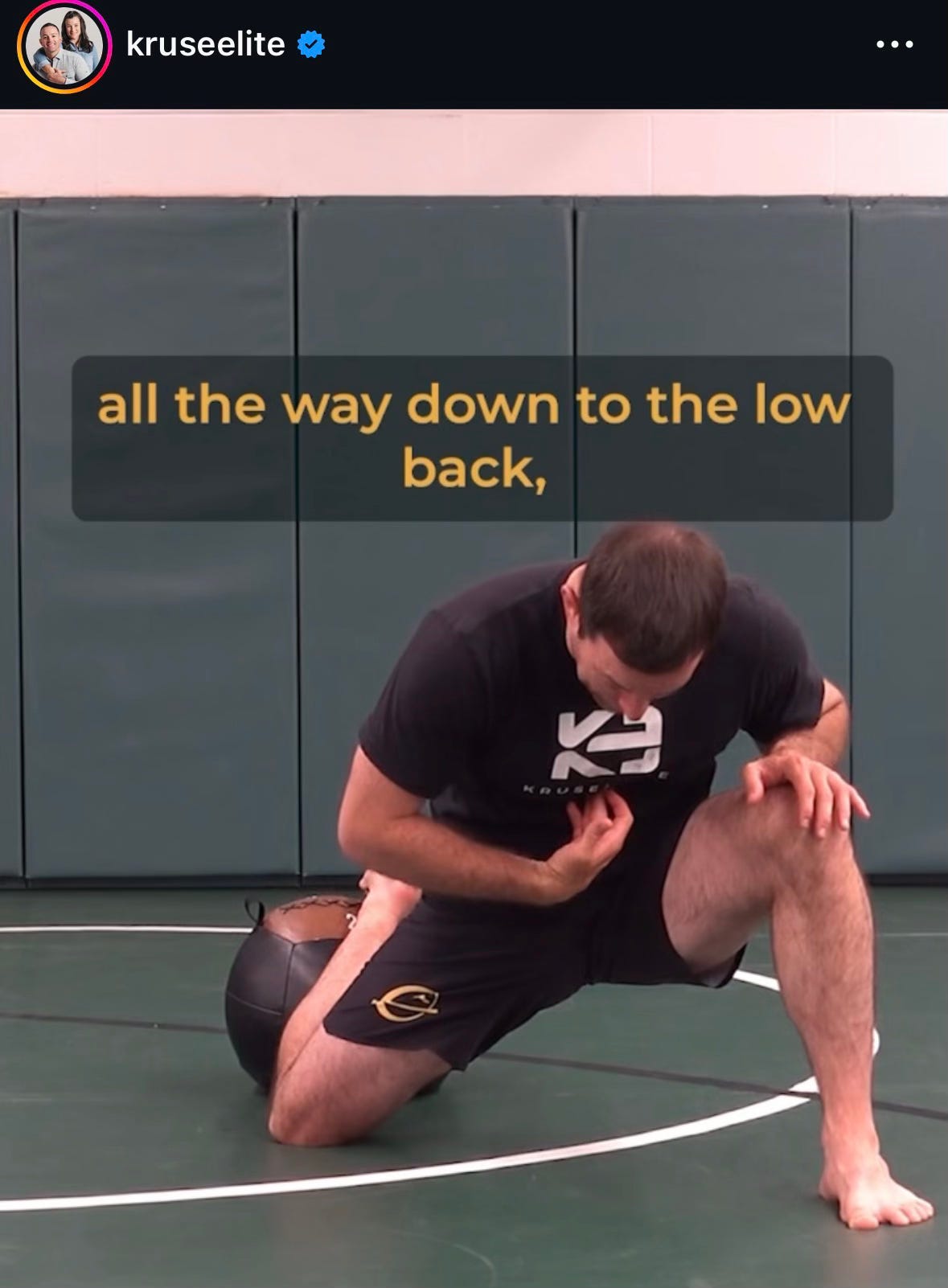
Obturator nerve stretch, with emphasis on hip abduction. Source: @kruseelite Lateral femoral cutaneous nerve. This small nerve supplies the upper lateral hip and lateral thigh, often mimicking IT band pain.
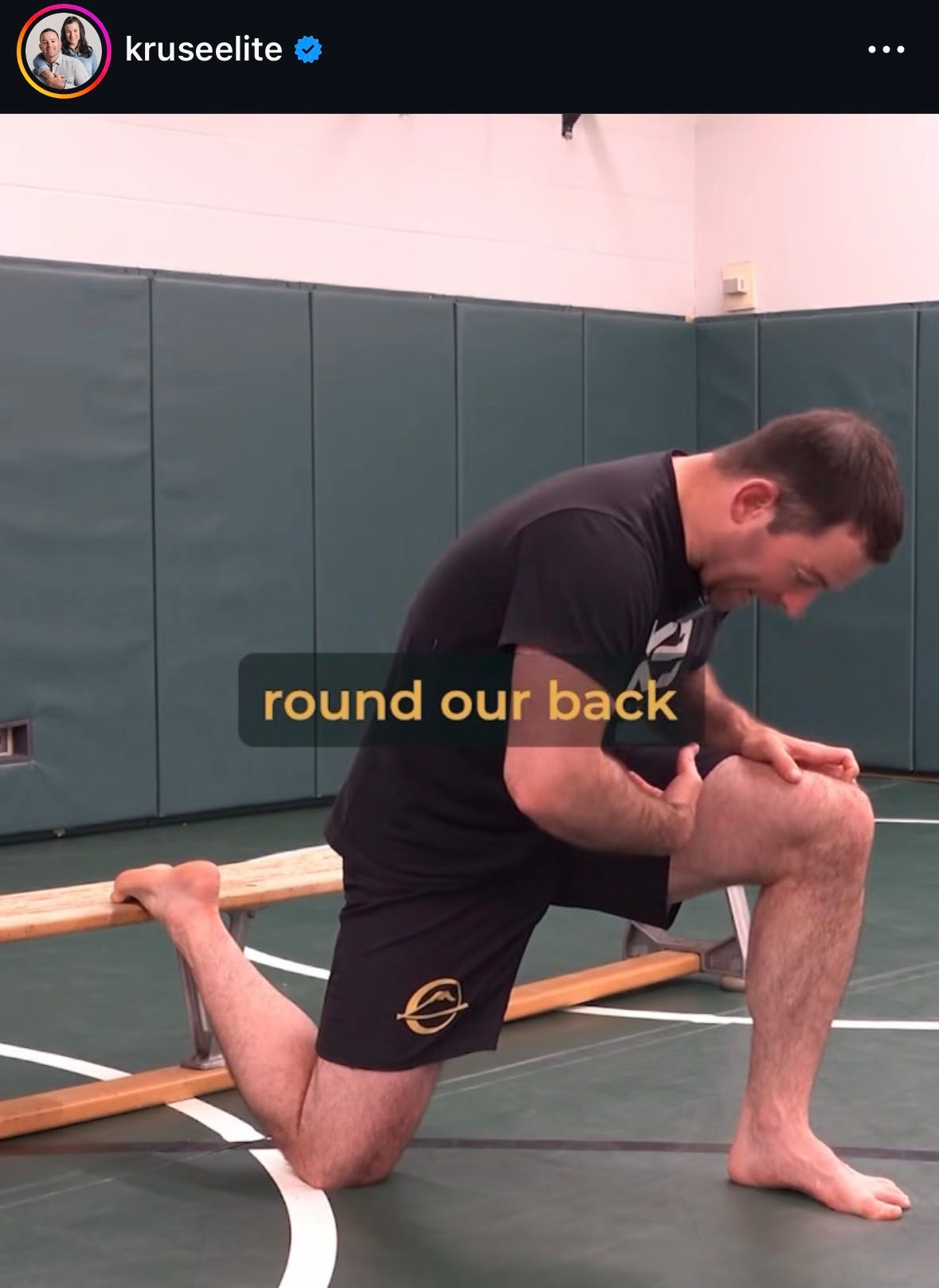
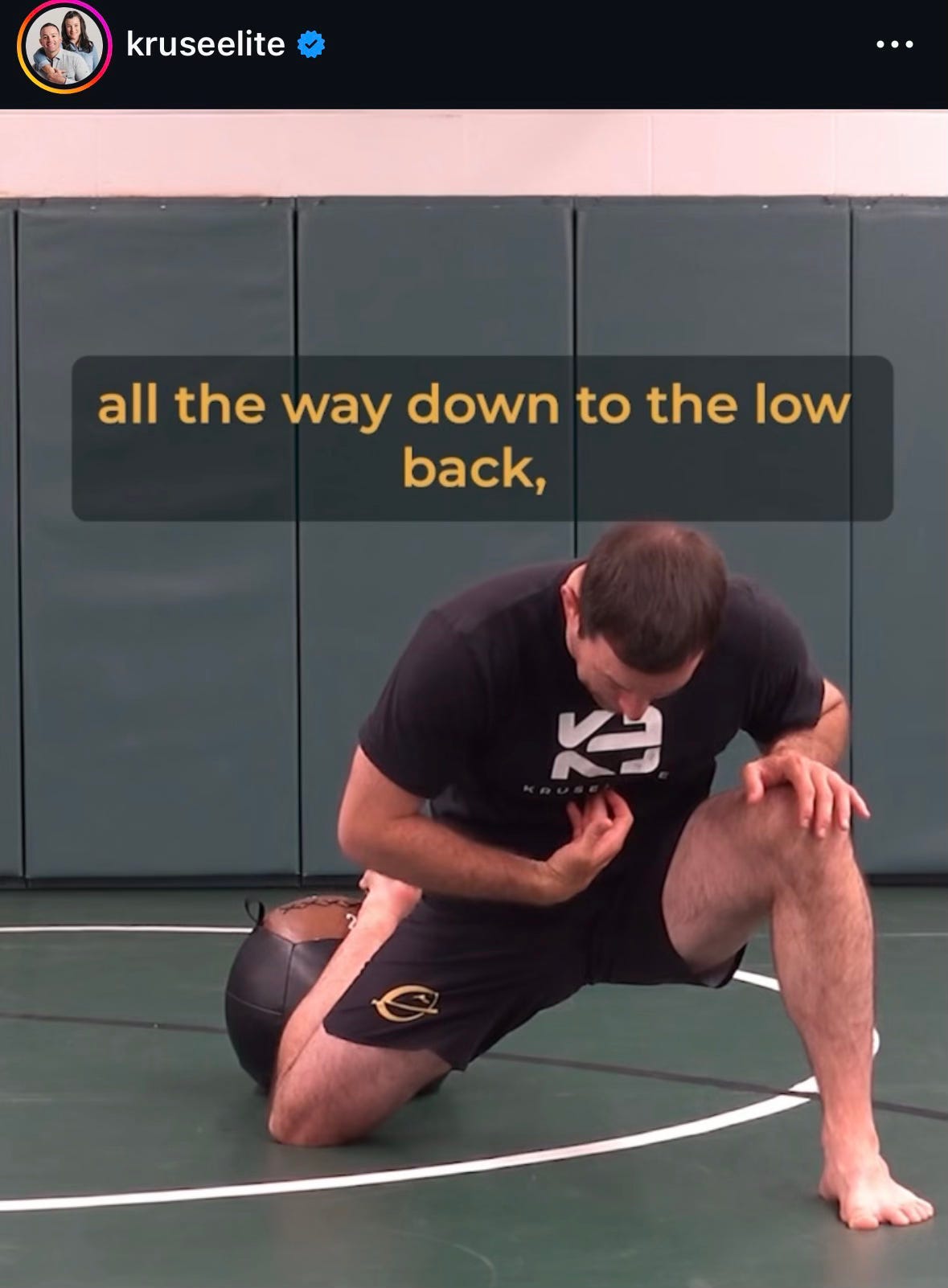
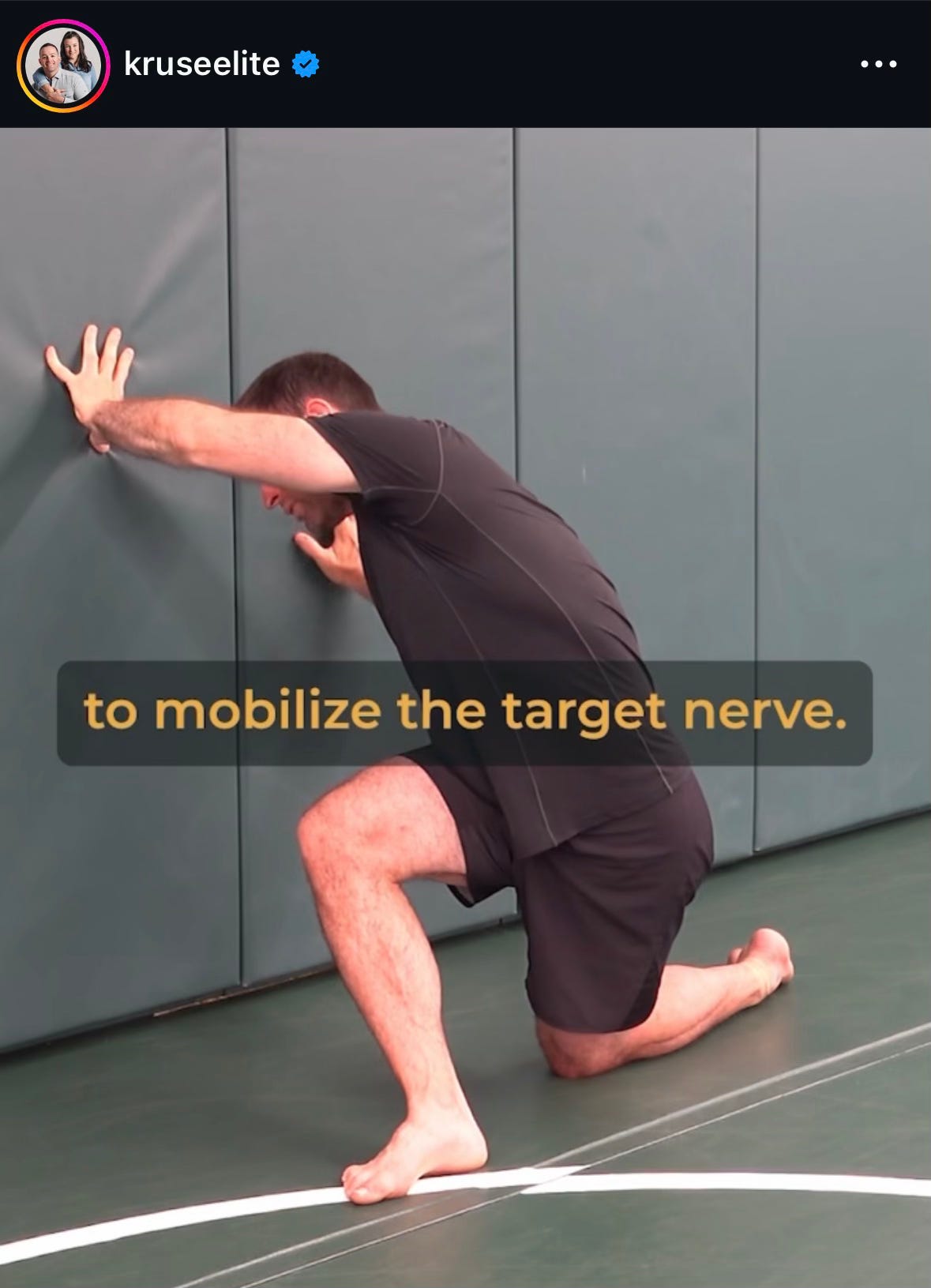
When nerve gliding always go easy. nerves don’t actually lengthen and can be very sensitive! As Taylor notes in the video, aim for “3/10 stretch” intensity for each!
Joe’s Articles. Running Traction with Microspikes! Tissue elongation isn’t the only “life-saving” traction. This (wintry) time of year, having advanced traction on your run, hike (or even daily walking) shoes may make the difference between an enjoyable (or at least survivable) frosty outdoor outing, and an ice-induced bruise, sprain or even fraction from a fall.
From my iRunFar.com colleague and friend Kristin Zosel, a review of the latest development in traction-enhancement for running shoes and boots, the microspike.
TL;DR: if you live in a winter climate — especially one with unpredictable surfaces ranging from dry-and-flat to crusty snow to glare ice — and still want to safely exercise (if not simply ambulate), grab some microspikes!
Victory Friday. Courageous Change for Better Patient Care. This week I moved into a new office. After nearly ten years in the same small house-turned-office—and seven years in the exact same single room—I finally made the change.
As I’ve written before, strong business practices and excellent patient care go hand in hand. When business setup falls short, patients miss out.
The old tiny room worked for me because it let me focus on what I do best: precise hands-on assessment and treatment in a calm, quiet setting.
But it created real limitations for my patients:
• They squeezed into a cramped, shared waiting area before appointments.
• I often had to send them outside to observe walking—and always to watch running.
• My favorite ankle mobilization required them to stand on the porch because nothing inside could anchor the belt securely.
• Resistance exercises were limited to small stretch bands; heavier loads were difficult or impossible to provide.
• Floor space was too small for meaningful mobility and strength work.
The new office changes everything:
• It’s four times larger, with three dedicated spaces: a private treatment room, a secondary room with a treadmill setup, and a big open area for waiting and exercise that includes heavy strength equipment3.
• I can now watch full walking strides indoors (40 feet of straight-line space instead of 15).
• A multi-purpose heavy trainer includes a squat/deadlift rack, overhead pull-up bar, adjustable pulleys for consistent resistance at any height, and solid anchors for banded stretching.
• A multi-plane gait analysis system projects real-time side and rear views of the patient’s stride on a TV screen directly in front of them.
These upgrades are nice extras, but the real impact is practical: they make my work easier and dramatically improve the patient experience and outcomes.
The move felt like a big leap. For too long I stayed complacent—or honestly, too scared—to act.
Only when it became clear how much better my patients would be served did I find the courage to go for it.
One week in, the improvements are already obvious. It’s a true win-win for me and every client.
Take-Aways. Look for the Win-Win. In clinic and in life, when a tough decision or scary change looms, ask: Does this benefit both me and others? If the answer is yes—if it’s genuinely best for everyone—then it’s the right move, even when it feels hard.
I’m more excited than ever for the year ahead and what this new space and fresh energy will unlock for my clients and me.
Keep taking chances.
Issue 119 is a wrap!
Help people move, function and feel better: please share this publication!
Thanks for reading, and have a great weekend,

My posts on traction include:
Issue 20: Traction Derby. Chronicling the improvements in lower quarter mobility (hip, hamstring, sciatic nerve, ankle) and pain (posterior thigh, foot and ankle) improvements by using cervical traction, coupled with lower extremity movements such as lower trunk rotation and legs-up-the-wall.
Issue 56: Is it Really Cervical Traction? Or Cranial? What, exactly, does a home cervical traction unit “pull on”? We theorize the unit also applies traction force to the posterior cranium (temporal and occipital bones) as part of its therapeutic effect.
Issue 62: Joe’s Roman Chair Nerve Fascia Traction Stretch. Using a 45-degree bench in the gym to perform flexion and rotation-based spinal traction.
Issue 111: Dead Hangs for All. Dead hangs from a pull-up bar not only build upper-body strength, but also improve shoulder, elbow, and wrist mobility via traction, and often relieve low back pain through spinal decompression.
The low back pain relief may stem more from stretching the upper extremity nervous system fascia, implying a real to treating the upper extremities and cervical region to address low-back and lower-body issues.
Of note: ironically this larger space is only modestly more costly than the previous, tiny space. Not every cost scales linearly.