
Victory Friday | Issue 121
Orthopedic Insights: Low Pain, Low Effort, High Yield: Gold Standards for High-Efficiency Stretching • Heads Will (Massage) Roll! • Engineering Your Adventure Happiness • More Fantastic Fibula Wins!

“Be like water making its way through cracks. Do not be assertive, but adjust to the object, and you shall find a way around or through it.” ~ Bruce Lee
Victory Friday is a weekly digest of reflections, insights, and tools from the world of functional manual and performance medicine. It is a free weekly publication. To support Victory Friday with a paid subscription, click below:
Happy Friday, everyone! And because this day marks the beginning of my Hawaiian vacation, it is officially “Aloha Friday”. As such, I’m feeling…a bit more relaxed. But I (and our clients) still need to feel good. So if you want the easiest, least painful paths to mobility gains, pain relief and relaxation this week, keep reading. Mahalo!
What I’m Into: “Low Pain, Low Effort, High Yield”: Gold Standards for High-Efficiency Stretching. When prescribing home exercise to clients or athletes, I am highly empathetic. I consider:
• Would I (/do I) do this, myself?
• Will it deliver me immediate, measurable results? (Is it coffee or vitamins?1)
or,
• Is this exhausting, miserable, and painstakingly slow?
In spite of basic logic2, the masochistic nature of rehab medicine compels people to believe that painful, exhausting exercise is not only okay, but more effective than “easy” ones.
And while some discomfort and effort may be required:
the hallmark of highly-effective mobility exercise is one that
delivers results with relatively minimal pain and effort.
Highly effective, high-efficiency mobility strategies are characterized as:
Low pain. As much as possible, effective mobility strategies should be low- to moderate-pain, only.
While most inputs — fascial elongation and “fascial play”3— will surely be uncomfortable, effective tissue mobilization needn’t be extremely painful.
In fact, severe pain is usually a sign of an ineffective treatment for two reasons:
The “Locked Front Door”. Severe pain with stretching often indicates the true restriction is not where you’re applying the stretch. For example, extreme pain while performing an off-the-step ankle dorsiflexion stretch indicates that the tissue restriction is somewhere besides the immediate calf and achilles. Instead, the plantar foot fascia may be extremely tight (even if it is otherwise asymptomatic: inert stiffness4)
Low effort. Effective, sustainable mobility strategies should be low- to moderate-effort.
Because sustained mobility gains usually require both high volume and high frequency (see below), this point is practical: self-massage and stretching techniques must be low-effort enough to be performed for long enough periods and frequently enough for sustained improvement.
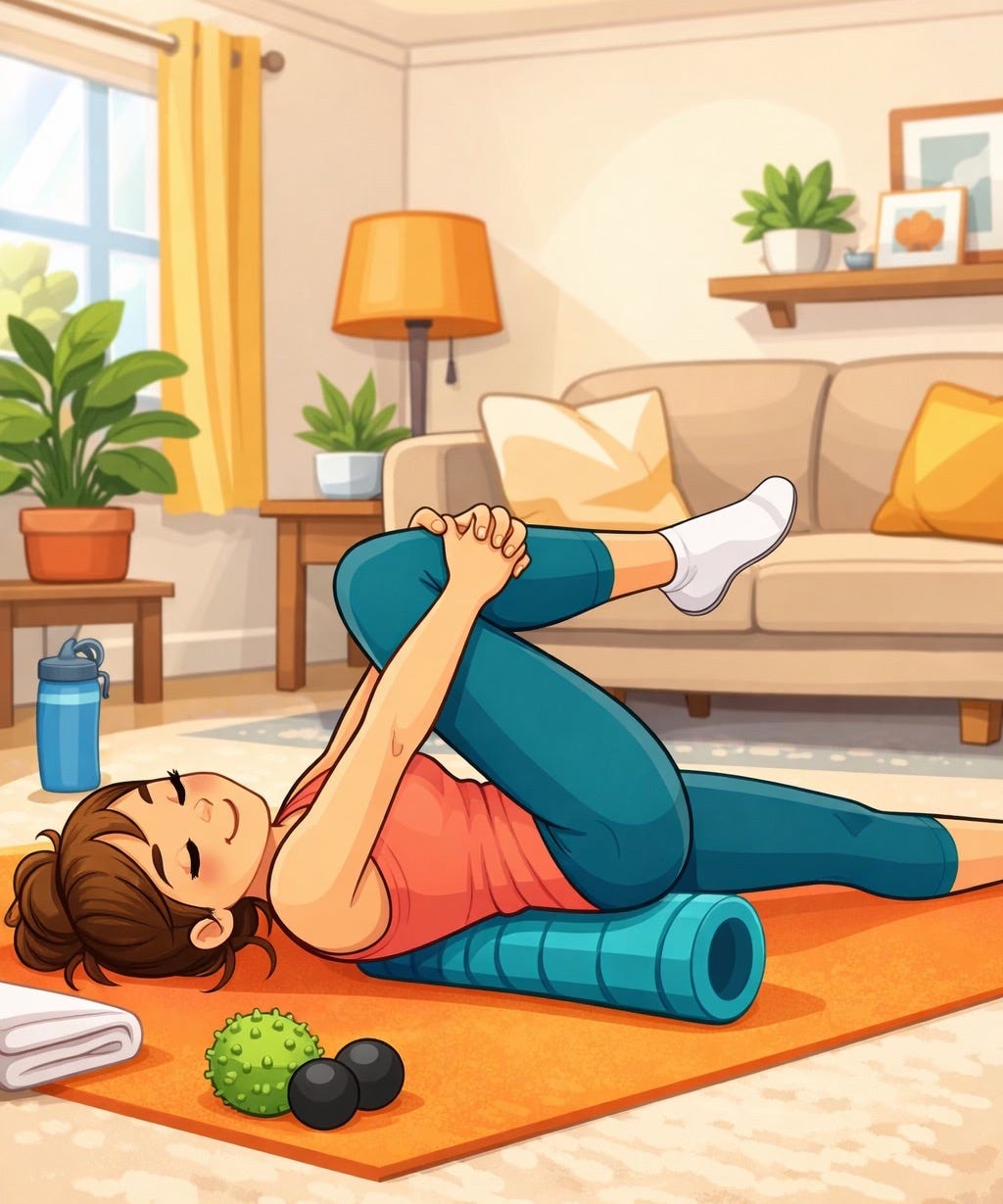
• lying down stretches > standing up
• body part laying on foam roller > hovering over a roller
This may sound ridiculous but even for me, an athletic healthy man that lifts weights and runs nearly daily, foam rolling my anterior thighs and shins requires a hand or elbow plank that, after a minute, gets challenging for me! (So how might my less strong, less energetic clients fare?)
Lastly,
High yield. Effective strategies should result in immediate and measurable improvements in mobility.
This should go without saying, but it is too common to perform a lot of self-massage and stretching, and…feel no improvement.
In fact:
Have you ever stretched then immediately felt stiffer?
(This is the result of aggressively — or simply ineffectively — trying to mobilize nervous system tissue. It increases tone and decreases system motion as a result)
If joint and myofascial structures are effectively mobilized — spinal motion, ankle dorsiflexion, toe-touch, knee to chest, overhead reach — you or your clients should both see and feel immediate, measurable mobility improvement.
Coffee-like effects.
If no improvements are seen or felt in-session, a slow, vitamin-like improvement is possible, but is more likely to require — you guessed it — more pain, more effort, and more time: often without achieving full end-range motion.
High-Efficiency Examples. The following is a short list of some of my favorite high-efficiency mobility strategies, per body area:
• ankle dorsi- and plantar flexion — belt ankle stretch
• spine, hip and shoulder mobility — ribcage (and diaphragm) foam rolling
• anterior hip and knee — sidelying quad-hip (“Joe’s Couch”) stretch
• neck and shoulder — scalp massage (as described in my craniocervical treatment strategy5)
Painful, Exhausting & Slow: Low-Efficiency Examples. Conversely, here are some of my most-hated low-efficiency mobility strategies:
• posterior thigh/hamstring — long-sitting toe-touch (“pike”) stretch
• ankle dorsiflexion and achilles/calf mobility — standing calf stretch
• shoulder overhead flexion — pulleys!
High-pain, low-yield strategies are often the result of what I refer to as, “bashing on a locked door”: a direct (“front door”) stretch that moves in the desired direction, but fails to achieve results.
It’s as if that front door is locked or obstructed. You can bash on it but it moves very little, if at all.
“The Side Doors”: Why The Good Ones Work. Underlying most high-efficiency mobility strategies: they’re fascial. They target specific fascial tissues in the most specific ways:
• scalp massage: superficial fascial of the head and neck, releasing the neck and shoulders
• quad/hip stretch: global fascial lines of the leg, pelvis and trunk to effectively release the anterior hip and knee
• the ribcage diaphragm rolling: diaphragm and visceral fascia, releasing both upper (shoulder) and lower (pelvis) ribcage attachments
These are often “side door strategies”: non-intuitive system interventions that eventually — and more easily — unlock that stuck front door!
Secondarily, high-efficiency mobility applies force to specific joint tissues to impact precise movements:
• the belt ankle: anterior to posterior glide of the tibia and fibula required for dorsiflexion
Fascial Remodeling Requires Frequency. Even though they should be low-pain and low-effort, high-efficiency stretching still requires high frequency.
Fascial remodeling requires consistent input. Even rapid gains in motion will often be lost in a fascial (collagen polymer) “recoil”. Thus mobility inputs need to be frequent and consistent to keep the gains from day to day (if not, at times, hour to hour).
But what isn’t necessary? A lot of pain, a lot of effort, and vast amounts of time!
Takeaway: Effective Mobility is Efficient! Find those strategies that, as much as possible, deliver on those three variables. And those strategies that fall well short? It’s unlikely they’re the ideal, let alone correct, strategy to begin with.
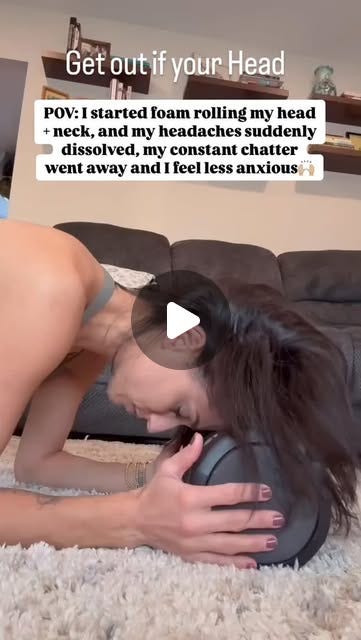
Cool Exercises I Like. Heads Will (Massage) Roll! I have been performing and promoting “cranial superficial fascia” mobilization — scalp massage — for years.
I find myself doing more scalp work because I see impacts not just for issues like headaches and jaw pain, but also neck, shoulder and even lower body mobility restoration!
While I sometimes teach clients to rub their own head with their fingers, I have struggled to find effective tools for the job that aren’t overly aggressive or dangerous6.
It wasn’t long before I wondered, “…could you simply foam roll your head?”
It turns out, you can.
From fascial physio, Maria Alfieris (@magicalhandsphysicaltherapy), here is a strategy for head foam rolling, and feedback on some head-centric benefits:
If you try it:
• Mind the neck! Any force through the head also passes through the neck. Keep your neck elongated and in neutral
• Go easy! Start light and low volume (short duration): you’ll be surprised at how little pressure can produce big effects. Limit roll time to a minute or less to gauge the effect.
• Be symmetrical. Work all sides, then spend time on more “interesting”, troublesome spots.
Joe’s Articles. Hang Loose! Engineering Your Adventure Happiness. Embracing the Hawaiian principle of lokahi — harmony between mind, body, spirit, and nature — this piece reveals science-backed ways to engineer greater happiness, performance, and fulfillment in running and in life.
From iRunFar.com,
Engineering Running Happiness: The Science-Backed Mindset of Performance Happiness and Success
TL;DR:
Core happiness equation: Happiness = Reality – Expectation (from the book Engineering Happiness by Manel Baucells and Rakesh Sarin); satisfaction depends on how outcomes compare to what was anticipated.
Reality components: Includes internal factors (fitness, preparation, nutrition, pacing, handling pain/effort) and external factors (weather, terrain, competition); some are controllable through training and execution.
Expectation components: Shaped by internal perceptions (perceived fitness, experience) and external views (course difficulty, expected conditions); high expectations come from strong fitness or familiarity, while low expectations arise from inexperience, fear, or challenges.
Key dynamic: The gap between reality and expectation determines happiness; same outcome (e.g., finishing time) can feel very different based on expectations — high expectations can lead to disappointment, low ones to greater joy and accomplishment.
Impact of newness vs. familiarity:
Novel challenges (e.g., first ultra) lower expectations due to fear of the unknown, boosting preparation, endurance, and post-race happiness.
Familiar races raise expectations faster than actual ability (linked to Dunning-Kruger effect), increasing risk of dissatisfaction or quitting during moderate suffering.
Longer distances and happiness: Ultras and 200-milers often feel “easier” subjectively due to lower expectations for comfort combined with high achievement in finishing.
Strategies to boost happiness and performance:
Enhance reality — Maximize preparation (physical/mental training, pacing, fueling) and responsiveness to conditions.
Manage expectations — Use flexible/dynamic goals, prepare for worst-case scenarios, respect the challenge (avoid assuming ease), and temper over-optimism from experience.
Overall takeaway: Optimizing mindset by controlling expectations and building capability sustains endurance through suffering, increases post-event satisfaction, and supports better performance and success in running (especially ultras).
Victory Friday. More Fantastic Fibula Wins! The fibula — and its surrounding fascia — was the theme of this week.
Achieved some fun, potent wins working on the fibula and its relationship with the tibia, ankle and thigh this week.
Some examples:
1. Dorsiflexion restoration in a chronic stiff ankle. One client has had a stiff left ankle for years. No matter what, or how hard, he tries, it fails to improve7.
2. Chronic knee pain and mobility loss with valgus deformity. I saw one of my favorite clients for the first time in months. An arthritic right knee — featuring significant (15-20 degree) valgus deformity8 — is due for replacement in six weeks.
To ensure the replacement knee will achieve and maintain neutral, we went after the surrounding fascia. This included the fibula.
As I worked, she noted that she experienced a severe ankle sprain to that leg many years ago (which may have predisposed for the knee valgus and chronic pain).
3. Increased lateral hip and knee pain (in a chronic hamstring/sciatic nerve pain client). One of my favorite, most challenging and rewarding clients, who is doing incredibly well with huge improvements in physical activity, notes increased left leg pain — and impaired walking tolerance — this week. She complained of posterior and lateral hip, as well as lateral knee and calf, tightness.
For each client I performed the following strategies:
• Three-dimensional tissue mobilization. I worked not just the fibula bone, but all fascia around the fibula including: superficial fascia (skin), anterior and lateral compartment (tissue play), posterior calf (including syndesmosis — the tib-fib posterior relationship), and, when necessary, peripheral nerve mobilization of the fibula nerve branches.
• fibula efficiency mobilization. I then mobilized the fibula in every direction, achieving both neutral alignment and “springy end-feel”9 in all directions.
The results were quick and profound!
1. Marked dorsiflexion restoration in my chronic ankle stiffness guy.
2. Substantial — almost shocking — improvement in knee flexion mobility in my pre-op knee replacement gal. She achieve +15 degrees flexion from treatment to the fibula only: no direct knee treatment!
3. Major decrease in lateral hip, knee and calf tightness in my other gal. She hadn’t been able to walk much over the past week but, immediately post-session, reported that she walked a full mile with hardly any soreness.
Take-Aways. Keep the Fibula in Your Treatment Thoughts! I surmise that because the fibula is so dynamic — with so much motion and so easily disturbed into excessive elevation and depression — that its fascial connections to the system are strong and impactful.
And these treatment outcomes — and their systemic effects — are good proof of that!
So get to work on those lateral shins, and have fun with the results!
Issue 121 is complete!
Help people move, function and feel better: please share this publication!
Thanks for reading, and have a great weekend,

Issue 106: Vitamins vs Coffee. Contrasting exercise intervention types between slow-acting (“vitamin”) and fast-acting (“coffee”). Vitamin-style exercises (cardio, stretching, or strength training) require weeks to years for gradual benefits, much like daily vitamins that offer delayed, hoped-for improvements. In contrast, coffee-style exercises provide fast-acting, layered effects—immediate gains in mobility, strength, and motor control, sustained improvements within days to weeks, and cumulative long-term benefits—making them more effective and motivating for short- to medium-term rehabilitation, especially for those people already “taking a lot of vitamins” (general physical activity and fitness).
Fascial Play is a mobilization strategy that gets adjacent — but not anatomically connected — tissues to move more freely and independently of one another (for example: between fascial compartments of the thigh). This is especially important when those adjacent tissues have oppositional functions, as these tissues need to slide/glide past each other without sticking.
Issue 9. Inert Stiffness Dysfunction. An Inert Stiffness Dysfunction (ISD) is an asymptomatic, painless restriction in one area (usually fascial/muscular) that silently steals mobility and creates distant pain or dysfunction through connected tissues. The ISD site itself stays asymptomatic until directly treated. Examples: stiff quads causing knee pain, silent plantar foot restrictions driving calf issues, or dense contralateral neck fascia triggering unilateral neck/head pain.
Issue 26: Joe’s Cranio-Cervical Treatment Strategy. My multi-dimensional treatment strategy for the craniocervical, orthopedic and neuro-fascial system: treat the layers (scalp, bones and sutures, subcranial fascia and tissue), correct the cranial torsion, then restore efficiency to the cervical spine.
This includes vibration/percussive massagers, which are far too aggressive (if not dangerous) for the neck and head! Avoid.
This includes consistent belt ankle mobilization. That he’s been diligent with this — yet failed to improve — was a big clue the issue lay elsewhere.
Valgus: an inward-hinging of the knee (e.g. “knock-kneed”)
normal, efficient tissue characteristic, per Institute of Physical Art Founder Gregg Johnson