
Victory Friday | Issue 124
Orthopedic Insights: Conspiracy Theories Pt 2: Anemic Over-Stride, Super-Shoes, Super-Upset Gut • Britta’s (Glute) Ballerina • Athlete Wellness, The Natural(-pathic) Way • Arm Swing is Everything Pt 1

“Constant repetition carries conviction.” ~ Conor McGregor
Victory Friday is a weekly digest of reflections, insights, and tools from the world of functional manual and performance medicine. It is a free weekly publication. To support Victory Friday with a paid subscription, click below:
Happy Holistic Friday! Lessons (and conspiracies) abound this week on efficient running and walking, and how to use — and care for — your whole body! Check it out!
What I’m Into: Orthopedic Conspiracy Theories (Part 2): Anemic Overstriding, Super-Shoes, Super-Upset Gut. I have a lot of alternative (if not controversial) “conspiracy theories” in the realm of orthopedics and sports medicine, in various stages of exploration.
Last week I unpacked three theories about men’s health and fascial tension.
Here are two more to consider:
• Anemic Runners & Overstriding. Low iron levels and low hemoglobin are common in runners, often linked to footstrike hemolysis.
This condition happens when repetitive foot-impact forces destroy red blood cells, releasing hemoglobin and iron and contributing to deficiency over time.
Impact forces are much higher in runners who overstride (foot lands too far ahead, typically with heel strike and extended leg), increasing braking forces and mechanical stress.

Runners with current or past iron deficiency should therefore prioritize stride efficiency—especially reducing overstriding—to lower excessive forces, limit further hemolysis, and better maintain iron status and performance.
• Super-Shoes & Gut Dysfunction. This one came courtesy of a buddy of mine, who messaged me, after using them for a recent half-marathon:
“I’ve never felt my entire stomach tense/cramp all at once!”
Is there a mechanism, and if so, which one? That super-shoes:
• make you run faster and (in various ways) change form, causing increased core stability demands?
• make you run faster, causing more mechanical strain to the guts (more jostling)?
or my theory:
Super-shoes help store (if not generate) increased landing and propulsive energy that is focused in the lower legs. This overloads the lower leg fascial lines, which are directly connected to the abdominal and visceral (organ) fascia.
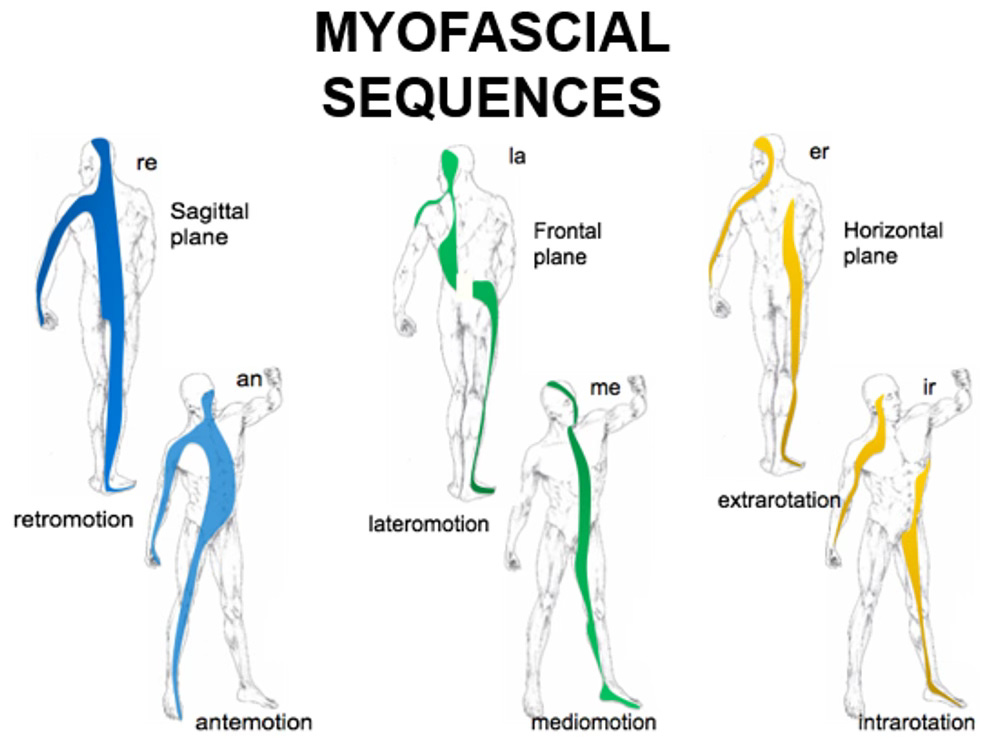
Currently there are few published insights or anecdotes on this super-shoe-gut phenomenon to be found, but this is a fascinating idea worth keeping an eye on.
Cool Exercises I Like. Britta’s (Glute) Ballerina. One of my favorite sayings, from my mentor Kent Keyser:
“The masters do the basic well.”
While I love complex exercises, I appreciate — and continually return to — the core foundational exercises that, if done well, are a platform for the greatest strength, coordination and efficiency.
They are often simple, if not boring1.
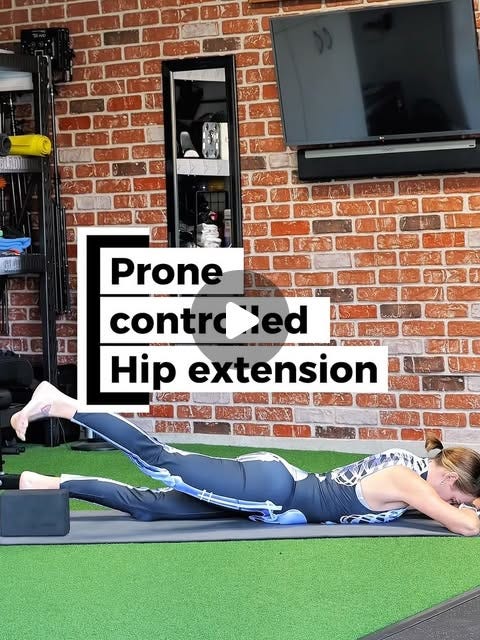
This one, the first in a terrific collection, may qualify. But the way Britta Pedersen, PT (@brittapedersonphysio) — an equestrian-specialist PT (and fellow Institute of Physical Art-trained colleague) — performs it makes it an outstanding, “core-first” way to work both trunk stability and active hip extension.
She adapts IPA Founder Gregg Johnson’s “Ballerina” — a prone hip and pelvis extension exercise — by adding a block to pass up and over:
Why I love this exercise:
• The Ballerina helps clients learn to extend the hip in coordination with the pelvis and spine. The movement involves lifting everything from foot to mid-thoracic spine, as if it were a solid 2x4.
• Britta’s inclusion of a yoga block requires this “whole-body lift” to clear the block; failure to also lift the trunk and pelvis likely prevents full clearance.
This whole collection represents a terrific progression of coordinated hip extension and glute activation — but it all begins with a well-executed Ballerina! Give it a try and consider adding it to your core stability routine (for yourself or your clients)!
Joe’s Articles. Athlete Wellness, The Natural(-pathic) Way. In my practice I promote holistic wellness that encompasses the whole body, the whole person, using sustainable, natural, and Lindy2 strategies.
This parallels the six core principles of naturopathy.
Regardless of one’s opinion on naturopathic medical treatment, the principles are ones to live — and play — by.
From iRunFar.com,
Six Principles Of Naturopathic Running Health
TL;DR. The Six Principles, applied to running and athletics:
Prevention (Praevenic): Prioritize overall wellness and disease/injury prevention through diversified training (varied distances, speeds, surfaces to build resilience, avoid monotony/overtraining) and balanced stress/rest (efficient running = natural strength/mobility; “look fast, feel fast”).
Identify and Treat the Causes (Tolle Causam): Address root causes rather than symptoms.
• Look to the Stride: Running form (especially overstriding) drives most injuries (e.g., plantar pain, Achilles, hamstring, low-back); stride analysis/correction is essential and often neglected.
• Equal and Opposite: Injuries often stem from imbalances between legs (e.g., weak push-off one side overloads the other).
• Chemical Stress: Excessive training/life intensity breaks down tissues; manage overall stress load.Treat the Whole Person (Tolle Totum): Holistic systems approach evaluating full body (head-to-toe mobility, strength, trunk/hip/pelvis function); one “lynchpin” fix (mechanical/chemical stressor) often resolves multiple issues via running’s reciprocal nature (“Uhan’s Second Law”).
Doctor as Teacher (Docere): Empower runners to learn their body (history, habits, sensitivities); use injuries as teaching opportunities for efficiency, training balance; avoid passive treatments that repeat problems.
The Healing Power of Nature (Vis Medicatrix Naturae): Trust the body’s self-healing; get out of the way (avoid interfering actions like over-cross-training); true rest is powerful; surrender to healing without giving up (rest > endless treatments).
First, Do No Harm (Primum Non Nocere): Use simplest, least-invasive options first (Occam’s Razor: rest before complex interventions); prefer “via negativa” (subtract stressors) over additions (drugs/braces/surgery) to avoid side/second-order effects.
Overall takeaway: Adopt a naturopathic, multi-dimensional mindset for robust, sustainable running health—focus on whole-person/systems care, root causes, prevention, education, minimal intervention, and nature’s healing power over fragmented, additive conventional approaches.
Victory Friday. Arm Swing is Everything, Part I. This past month I’ve treated three clients. In common:
• all runners or long-distance walkers
• all with a stubborn history of hip, knee, foot and ankle pain — requiring prolonged treatment and/or rest time. This includes both orthopedic and neurogenic dimensions.
• all are women3
and:
• all three demonstrated marked — and profoundly relevant — deficits in arm swing.
Specifically:
All three lacked efficient scapular-driven arm swing to complement their running and fast-walking gait.
In gait, the arm swing contributes a few things:
• balance
• force generation and propulsion
but perhaps most importantly
• spine and lower body efficiency
A scapular-driven arm swing is required to:
• enhance and improve hip flexion efficiency
• maximize a glute-driven hip extension push-off
• minimize excessive spinal motion, which can cause spine pain and referred nerve pain into the legs
But perhaps most salient for most of our fast runners and long-distance walkers:
An efficient scapular-driven arm swing optimizes (leg-under-body) leg landing — crucial to limit landing stress with high-volume running and walking.
It does all this through its complex fascial connections to the trunk and pelvis: namely through the thoracodorsal fascia. Energy inputs from the scapula transmit directly through the spine, to the pelvis and electrify the legs with maximal propulsive and efficiency-enhancing effect!
What it Looks Like. I outline a scapular-driven arm swing in great detail in this piece, but here is a useful image of how the shoulder blade needs to slide down-and-back (posterior depression) with the whole arm:
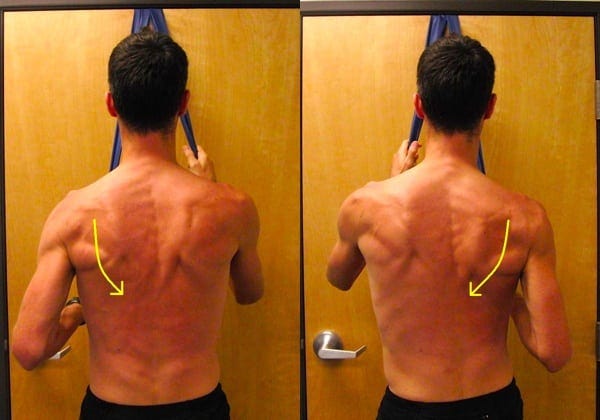
(The scapula also slides forward — to facilitate forward arm swing — though this motion is less force-generating.)
This motion is largest and strongest in fast running, less with easy running, and even less — but still active — with walking!
And when it is lost, effects may include:
• low back pain: without it, the lower spine tends to over-rotate, causing pain.
• upper back & neck pain: a mobile scapula gently stretches the neck; this effect is lost when shoulder blades are rigid
• hip pain
• any and all leg pain
Treatment Approach. For each client we did the following:
• Thoracic mobilization. Both hands-on and foam roll-assisted strategies to optimize thoracic motion. As this is the “foundational landscape” of the shoulder4, the vertebrae and ribs need to be mobile and neutral-oriented to allow the scapula to efficiently slide.
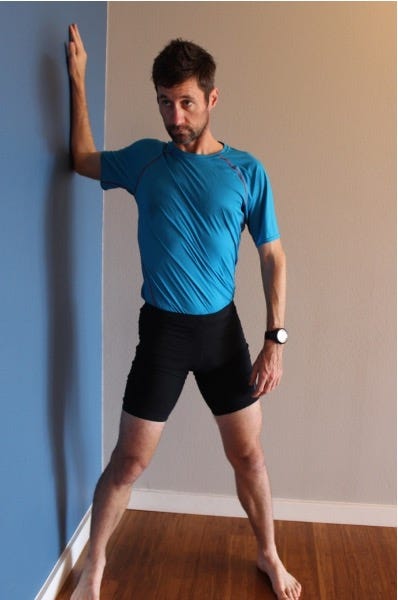
• Scapular mobilization. Hands-on and self-mobilization of the shoulder blade, primarily in posterior depression, but also anterior sliding. The chest-opener is a good home strategy for rear slide:
• Scapular active/resisted motion. Using resistance, emphasize a rearward arm motion initiated by posterior scapular slide:
• (Scapular-focused) arm swing drills. Finally, we work on practicing the scapular motion with a run- (bent) or walk- (mostly straight) specific arm.
We start slowly — to be sure the scapula is leading the movement — then get progressively faster:
Finally, we take it to the streets (or treadmill): practicing the integration of an active shoulder blade in running and walking.
Takeaways. A couple things to consider:
• An Inch Goes a Long Way. That small amount of shoulder blade motion makes a profound difference to the whole body.
For each client it resulted in:
improved hip mobility with less stiffness and pain
improved foot-under-body landing with less leg pain
improved top-end speed and endurance!
• Don’t Be Fooled! The Shoulder Blade Must Move! Runners and walkers will fool you with a big, strong arm swing…without enough (or any) scapular motion! While better than “no” swing, the scapula, itself, must actively move for a truly efficient arm swing.
Look closely and hands-on assess scapular motion to be certain!
Stay tuned for Part II of this story, next week, for one additional — but important — dimension of arm swing in these cases!
Issue 124 is complete!
Help people move, function and feel better: please share this publication!
Thanks for reading, and have a great weekend,

Issue 105: Joe’s (Hip) Six-Pack. A three-dimensionally strong hip will enhance not only focal strength and stability but also hip and leg mobility and overall athletic efficiency. This six-pack of exercises enhances coordination and stability in all six movements of the hip joint. Strength exercises include: prone hip internal rotation, sideplank clamshell external rotation, sidelying adduction, sideplank abduction, banded supine hip flexion and double- and single-leg bridging.
The Lindy Effect: “The longer a period something has survived to exist or be used in the present, the longer its remaining life expectancy.” In plain terms: an institution or strategy that has been around - and proven - for a long time is most likely to survive and stay salient.
This is relevant for Part II, next week
Issue 23: The Shoulder Landscape. The shoulder complex is an interconnected system of spine, scapula, clavicle and arm. The arm functions like a construction crane supported by a stable scapular platform, powered by an efficient cervical spine, and built on a neutral thoracic spine/ribcage foundation. Persistent shoulder issues often arise from an unstable or “hilly” thoracic foundation (e.g., elevated, flexed, or rotated ribs), so treatment prioritizes restoring thoracic neutrality first, followed by the neck and scapula, before addressing the shoulder directly—unless cranio-cervical dysfunction is the primary driver.